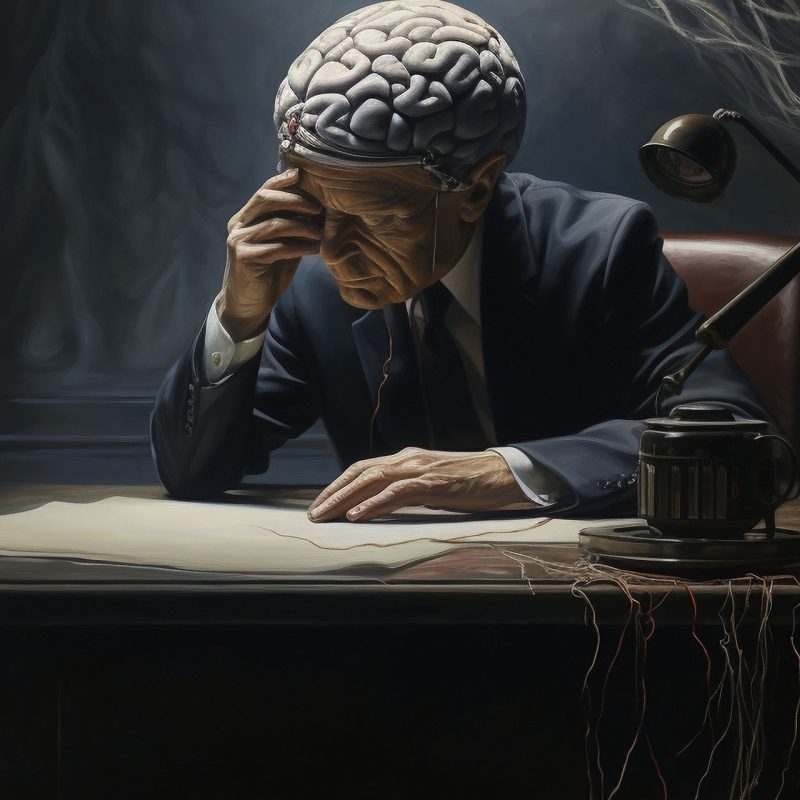
WHAT IS PHILOSOPHY?WHAT IS THE “SUBJECT MATTER” OF PHILOSOPHY
November 12, 2023

WHAT IS THE “SUBJECT MATTER” OF PHILOSOPHY

“There is a common misunderstanding that philosophy—like chemistry or history—has a content to offer, a content that a teacher is to teach and a student is to learn,” writes Professor…
ANALYTIC PHILOSOPHYHistory Of PhilosophyANALYTIC PHILOSOPHY IN THE TWENTIETH CENTURY
November 15, 2023

ANALYTIC PHILOSOPHY IN THE TWENTIETH CENTURY

The analytic tradition arose partly as a rejection of Hegelian idealism in favor of what George Edward Moore (1873–1958) called a “common sense” view of the world, alongside developments in…
History Of PhilosophyPOST-KANTIAN PHILOSOPHY IN THE NINETEENTH CENTURY
November 15, 2023

POST-KANTIAN PHILOSOPHY IN THE NINETEENTH CENTURY

Kant’s philosophy continued to dominate throughout the nineteenth century, although there were increasing concerns about the overall coherence of his system; in particular, there was doubt as to whether the…
FORMS OF PHILOSOPHICAL WRITINGTHE ESSAY OF ASSERTION
November 20, 2023

THE ESSAY OF ASSERTION

The essay of assertion takes the position I believe. It is an argumentative essay in which you convey to the reader some belief or beliefs that you hold. If you…
CONTINENTAL PHILOSOPHYHistory Of PhilosophyPHENOMENOLOGY
November 15, 2023

PHENOMENOLOGY

As originally developed by Edmund Husserl (1859–1938), phenomenology seeks to provide a detailed description of the way in which things are presented to us—that is to say, phenomena —in an…
NON-WESTERN PHILOSOPHICAL TRADITIONSHistory Of PhilosophyINDIAN PHILOSOPHY
November 15, 2023

INDIAN PHILOSOPHY

Philosophy on the Indian subcontinent between 1000 BC and the early centuries of the first millennium was comprised of six major schools of Hindu philosophy (Nyaya, Vaisheshika, Samkhya, Yoga, Mimamsa,…
Traditional Branches of PhilosophyPhilosophy BranchesLOGIC
December 12, 2023

LOGIC

Logic is concerned with studying the inferences we make, and the formal languages developed to systematize those inferences. This includes both the proof-theories and semantics for these languages, as well…
CLASSICAL PHILOSOPHYHistory Of PhilosophySTOICISM
November 15, 2023

STOICISM

Founded by Zeno of Citium (334–262 BC), early Stoicism shared many similarities with Epicureanism, including the belief that the world was largely deterministic and that the overall goal of the…
Modern Branches of PhilosophyPhilosophy BranchesHERMENEUTICS
November 14, 2023

HERMENEUTICS

Originally applied to scriptural exegesis (interpretation), hermeneutics is more generally the theory and method of all “textual” interpretation. In the modern context, this refers to both verbal and non-verbal “texts”…
Writing PhilosophyWHAT IS GOOD WRITING?
November 24, 2023

WHAT IS GOOD WRITING?

What is good music? What is good art? What is good writing? Such questions unleash many opinions. The branch of traditional philosophy called Aesthetics is devoted to answering such questions…
CONTINENTAL PHILOSOPHYHistory Of PhilosophyCONTINENTAL PHILOSOPHY IN THE TWENTIETH CENTURY
November 15, 2023

CONTINENTAL PHILOSOPHY IN THE TWENTIETH CENTURY

While the focus of western philosophy has primarily been on the analysis and understanding of our most basic concepts, another important theme has been the preparation and education of man…
LogicHIGHER-ORDER LOGICS
November 15, 2023

HIGHER-ORDER LOGICS

The language sketched above is better referred to as first-order predicate calculus, as the language only quantifies over (first-order) individuals. A stronger language, second-order predicate calculus, can therefore be constructed…
FORMS OF PHILOSOPHICAL WRITINGTHE PERSONAL ESSAY
November 20, 2023

THE PERSONAL ESSAY

The personal essay is a self-reflective search for meaning. Unlike most philosophical writing, it is not argumentative. Instead, it is exploratory and speculative, often even somewhat confessional. It is typically…
History Of PhilosophyPYTHAGOREANISM
November 15, 2023

PYTHAGOREANISM

Based on the teachings of Pythagoras (c. 570–495 BC) and the school he established inCroton in southern Italy, we may conclude that, in many ways, Pythagoreanism was more ofa mystery…
NON-WESTERN PHILOSOPHICAL TRADITIONSHistory Of PhilosophyAFRICAN PHILOSOPHY
November 15, 2023

AFRICAN PHILOSOPHY

The earliest indigenous African philosophy to produce written documents emerged during the seventeenth century, especially in Ethiopia. Zera Yacob (1599–1692), whose Hatata (1667) has been compared to René Descartes’ Discourse…

Books

  • The Critique of Pure Reason

    $8.89
  • Marcus Aurelius – Meditations: Adapted for the Contemporary Reader: Adapted for the Contemporary Reader

    $29.99
  • Meditations (Dover Thrift Editions: Philosophy)

    $5.00
  • Beauty: The Invisible Embrace

    $10.99
  • Aquinas (A Beginner’s Guide)

    $15.99
  • The Classical Heritage in Islam (Arabic Thought and Culture)

    $49.95
  • Meditations

    $12.01
  • The Socratic Dialogues Early Period, Volume 2: Gorgias, Protagoras, Meno, Euthydemus, Lesser Hippias, Greater Hippias

    $15.99
  • The Architecture of Community

    $59.91
  • Being and Time: A Revised Edition of the Stambaugh Translation (SUNY series in Contemporary Continental Philosophy)

    $24.95
  • An Unlikely Guru: How a Neurotic Jewish Real Estate Developer from New Jersey Found Enlightenment (And How You Can, Too)

    $17.99
  • End Times: Elites, Counter-Elites, and the Path of Political Disintegration

    $17.99
  • The Rebel

    $172.60
  • Self-Reliance and Other Essays (Dover Thrift Editions: Philosophy)

    $5.00
  • Super Stupid: Why The Educated Elite Are So Wrong So Often About So Many Things (Pinnacle Quest)

    $14.95
  • Why I Am a Hindu

    $20.00

The Atomos Blog

Philosophy of Law: An IntroductionAtomosPHILOSOPHY OF LAW

Philosophy of Law: An Introduction

Atomos EditorAtomos EditorJanuary 10, 2026
Philosophy of Science: An IntroductionAtomosPHILOSOPHY OF SCIENCE

Philosophy of Science: An Introduction

Atomos EditorAtomos EditorJanuary 10, 2026
Aesthetics: An IntroductionAESTHETICSAtomos

Aesthetics: An Introduction

Atomos EditorAtomos EditorJanuary 10, 2026
Epistemology: An IntroductionAtomosEPISTEMOLOGY

Epistemology: An Introduction

Atomos EditorAtomos EditorJanuary 10, 2026
Ethics: An IntroductionAtomosETHICS

Ethics: An Introduction

Atomos EditorAtomos EditorJanuary 10, 2026
Logic: An IntroductionAtomosLOGIC

Logic: An Introduction

Atomos EditorAtomos EditorJanuary 10, 2026
Metaphysics: An IntroductionAtomosMETAPHYSICS

Metaphysics: An Introduction

Atomos EditorAtomos EditorJanuary 10, 2026
Philosophy of History: An IntroductionAtomosPHILOSOPHY OF HISTORY

Philosophy of History: An Introduction

Atomos EditorAtomos EditorJanuary 10, 2026
Philosophy of Language: An IntroductionAtomosPHILOSOPHY OF LANGUAGE

Philosophy of Language: An Introduction

Atomos EditorAtomos EditorJanuary 10, 2026
Philosophy of Mind: An IntroductionAtomosPHILOSOPHY OF MIND

Philosophy of Mind: An Introduction

Atomos EditorAtomos EditorJanuary 10, 2026
Philosophy of Technology: An IntroductionAtomosPHILOSOPHY OF TECHNOLOGY

Philosophy of Technology: An Introduction

Atomos EditorAtomos EditorJanuary 10, 2026
Environmental Philosophy: An IntroductionAtomosENVIRONMENTAL PHILOSOPHY

Environmental Philosophy: An Introduction

Atomos EditorAtomos EditorJanuary 10, 2026
Feminist Philosophy: An IntroductionAtomosFEMINIST PHILOSOPHY

Feminist Philosophy: An Introduction

Atomos EditorAtomos EditorJanuary 10, 2026

Terms & Concepts

O

Ought

A moral term, often contrasted with “should.” As such, it is obligatory, rather than suggestive. https://youtube.com/shorts/68M1POCs5PA?feature=share
I

Intension

The meaning of an expression, as opposed to its extension (the set of things to which itapplies). The intension of a declarative sentence is usually taken to be a proposition.Expressions…
S

Slave morality

Fried rich Nietzsche’s (1844-1900) view of a morality of obligation, where one is a slave to imperatives rather than exerting one’s self-driven will to power. https://youtube.com/shorts/1_lkFgHuU-Y?feature=share
T
Tautological consequence
A
Ad hominem argument
T
Transcendental deduction
S
Subjective truth (subjectivity)
I
Individual constant
T
Truth value
S
Synthetic
C
Conjunction introduction
R
Reflective equilibrium
View All