search
History Of PhilosophyCLASSICAL PHILOSOPHY
November 15, 2023

PLATO

Plato (427–347 BC) was born into a powerful family in Athens but abandoned politics after the execution of his teacher, Socrates; he subsequently traveled, became influenced by the Pythagoreans, and…
CLASSICAL PHILOSOPHYHistory Of Philosophy
November 15, 2023

CYNICISM

Founded by Antisthenes (c. 445–360 BC), who taught the importance of individual virtue over material luxury, Cynicism was contemptuous of political institutions and organized religion. It rejected refined philosophical speculation…
NON-WESTERN PHILOSOPHICAL TRADITIONSHistory Of Philosophy
November 15, 2023

INDIAN PHILOSOPHY

Philosophy on the Indian subcontinent between 1000 BC and the early centuries of the first millennium was comprised of six major schools of Hindu philosophy (Nyaya, Vaisheshika, Samkhya, Yoga, Mimamsa,…
POST-KANTIAN PHILOSOPHYHistory Of Philosophy
November 15, 2023

PRAGMATISM

Pragmatism was a philosophical movement in the United States concerned with the relationship between abstract theory and practical activity, and with the value of philosophical reflection.
MEDIEVAL PHILOSOPHYHistory Of Philosophy
November 15, 2023

SCHOLASTICISM

A general term for those philosophers influenced by the medieval rediscovery of classic texts, Scholasticism is broadly characterized by an interest in logic and disputation and is motivated to resolve…
NON-WESTERN PHILOSOPHICAL TRADITIONSHistory Of Philosophy
November 15, 2023

AFRICAN PHILOSOPHY

The earliest indigenous African philosophy to produce written documents emerged during the seventeenth century, especially in Ethiopia. Zera Yacob (1599–1692), whose Hatata (1667) has been compared to René Descartes’ Discourse…
Philosophy BranchesTraditional Branches of Philosophy
December 12, 2023

PHILOSOPHY OF LAW

The philosophy of law is concerned with all aspects of theoretical reflection on laws and legal systems and therefore encompasses historical and sociological studies in addition to the philosophical questions…
THE EARLY MODERN PERIODHistory Of Philosophy
November 15, 2023

LIBERALISM

A political philosophy whose central claim is that a government’s authority is justified only insofar as it secures the liberty of its subjects, Liberalism is generally traced to John Locke…
FORMS OF PHILOSOPHICAL WRITINGWriting Philosophy
November 20, 2023

FORMS OF PHILOSOPHICAL WRITING

The word essay comes from the French infinitive verb essayer, meaning “to try” or “to attempt.” In fact, when the word was first borrowed into the English language, as essay,…
CLASSICAL PHILOSOPHYHistory Of Philosophy
November 15, 2023

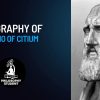
STOICISM

Founded by Zeno of Citium (334–262 BC), early Stoicism shared many similarities with Epicureanism, including the belief that the world was largely deterministic and that the overall goal of the…
Logic
November 15, 2023

PROPOSITIONAL CALCULUS (PROPOSITIONAL LOGIC)

The simplest formal (logical) language is the propositional calculus. This considers the logical relationships that hold between complete propositions.
History Of PhilosophyANALYTIC PHILOSOPHY
November 15, 2023

ORDINARY LANGUAGE PHILOSOPHY

Between the 1940s and the 1960s, analytic philosophy shifted away from investigating the (supposed) underlying logical structure of language. While it was still primarily concerned with conceptual analysis, this was…
FORMS OF PHILOSOPHICAL WRITINGWriting Philosophy
November 19, 2023

THE EXPOSITORY PAPER

We have already touched on the expository paper, but let’s discuss it briefly here. Look at the adjective expository. It is derived from the noun exposition, which is the noun…
PHILOSOPHICAL BOOKS AND TEXT
November 27, 2023

CRITICAL THINKING AND LOGIC TEXTBOOKS

Textbooks on critical thinking and logic.
FORMS OF PHILOSOPHICAL WRITINGWriting Philosophy
November 19, 2023

THE POSITION PAPER

A position paper may be viewed as a type of argumentative paper in that it states a claim—your position—concerning a topic, issue, or question and presents a justification for that…

Books

  • Sleeper, Awake: 40 days of companionship for the deconstruction process (The Path of Unlearning)

    $9.97
  • Determined: A Science of Life without Free Will

    $23.49
  • Ancient Ones Are Calling Us: Learning to Listen Changed My Life

    $17.95
  • The Best of Friedrich Nietzsche

    $19.99
  • Body Aware: Rediscover Your Mind-Body Connection, Stop Feeling Stuck, and Improve Your Mental Health with Simple Movement Practices

    $17.95
  • The Complete Works: Handbook, Discourses, and Fragments

    $15.44
  • How to See (Mindfulness Essentials)

    $9.89
  • The Stoic Man’s Guide: Daily Strategies for Modern Men: How to Embrace Timeless Stoicism for Happiness, Resilience, and Well-Being

    $11.99
  • Imaginomicon (Revised Edition): Accessing the Gateway to Higher Universes (A New Grimoire for the Human Spirit)

    $29.95
  • How to Die: An Ancient Guide to the End of Life (Ancient Wisdom for Modern Readers)

    $13.59
  • Super Stupid: Why The Educated Elite Are So Wrong So Often About So Many Things (Pinnacle Quest)

    $14.95
  • The World as I See It (Deluxe Hardcover Book)

    $9.99
  • The Magick of Aleister Crowley: A Handbook of the Rituals of Thelema (Weiser Classics Series)

    $19.19

Terms & Concepts

G

General conditional proof

In symbolic logic, a valid inference in a system of quantifier rules. From the assumption that an individually named thing has a specific property, an inference is drawn that that…
E

Existential quantifier

The symbolic logic notation used to make claims about the existence of at least one object ina domain of discourse. The notation ∃ followed by a variable is used to…
S

Synthetic

Kant’s term for a judgment whose predicate concept is not contained within the subject concept. As such, the predicate extends what is said in the subject. https://youtube.com/shorts/gve9fAoVA4g?feature=share
P
Prisoner’s Dilemma
D
Datum
H
Historicism
C
Criterion
A
Atheism
I
Incoherent
I
Indeterminism
U
Unsound
B
Becoming
View All